SIM Owner Details by Number in Pakistan: What Does It Actually Mean?
When people search for SIM Owner Details by Number in Pakistan, they may be looking for several different kinds of information. Some users want to understand who a mobile connection belongs to, while others simply want to verify whether a number is connected with their own identity, identify its network, or investigate an unfamiliar SIM registration.
These are not necessarily the same task.
A mobile number is associated with a subscriber connection, but that does not mean that every piece of information connected with that number is publicly available. In Pakistan, official SIM-verification systems are designed around particular purposes, especially checking SIM registrations associated with a person’s own CNIC.
The official SIM Information System currently provides a CNIC-based facility for checking the total number of SIMs registered against a CNIC. It also states that the network of a number can be checked by sending N 03xx3456789 to 76367, subject to the stated charge.
That distinction is important because SIM Owner Details by Number is often used online as though it means “enter any mobile number and receive the complete private identity record of its subscriber.” That is a much broader claim than ordinary SIM verification.
A better way to understand the topic is to separate subscriber verification, SIM registration, network identification, and private personal information.
The National Database and Registration Authority (NADRA) is responsible for Pakistan’s national identity registration system, including CNIC-related records. When SIM registration is linked to a person’s identity, CNIC information forms an important part of the registration process, so users should rely on official NADRA resources for identity-related information and services.
What Information Is Connected With a SIM?
A SIM connection exists within a larger telecom registration system. Depending on the particular service and verification method, information can relate to the subscriber, the mobile connection, the network, or the registration process.
For example, a SIM may be associated with:
- A mobile number
- A telecom operator
- Subscriber registration information
- CNIC or other identity documentation used during registration
- Biometric verification performed during applicable registration procedures
- SIM activation or account status
- Network-related information
However, these categories should not be treated as one publicly searchable database.
Pakistan’s telecom security framework also treats information such as names, addresses, CNIC numbers, phone numbers and other identifying information as personal data within the relevant telecom-data context.
This is why a responsible SIM Owner Details by Number guide needs to explain not only what users can check, but also what information should remain protected.
Can You Find SIM Owner Details From a Mobile Number?
This is one of the most important questions behind the keyword.
If by SIM Owner Details you mean the official registration information connected with your own SIM or CNIC, there are legitimate verification routes available.
If you mean obtaining another subscriber’s private identity information simply by entering their mobile number into an unofficial website, that is a different matter.
The official SIM Information System does not present itself as a public directory where a visitor enters any person’s mobile number and receives their complete private subscriber record. Its main CNIC-based facility is specifically presented as a way to find the total number of SIMs registered against the entered CNIC.
This distinction should always be kept in mind when evaluating websites that advertise a “SIM owner lookup.”
A mobile number can be useful for:
- Identifying the relevant mobile network through an applicable checking method
- Managing your own mobile connection
- Investigating your own SIM registration
- Contacting the relevant operator about an account issue
- Beginning an appropriate complaint or verification process
A mobile number should not automatically be treated as a key to:
- Another person’s confidential CNIC record
- Private residential information
- Private subscriber databases
- Biometric records
- Confidential telecom records
- Real-time private location information
The important point is that SIM Owner Details by Number should be understood according to the actual purpose of the verification method being used.
SIM Owner Details by Number vs SIM Registration Check
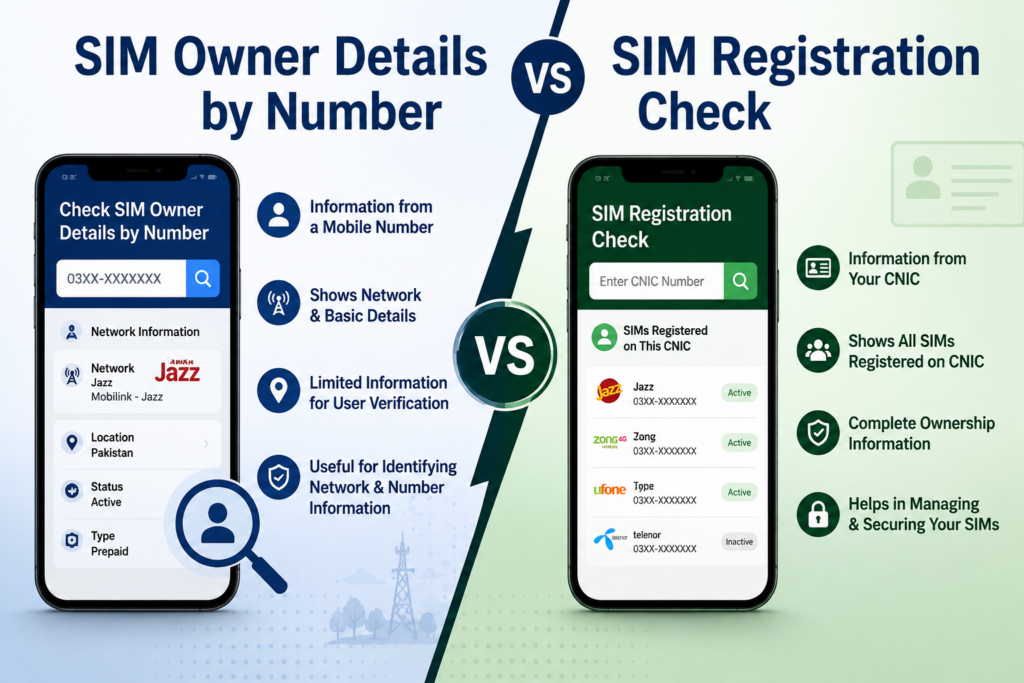
These phrases are closely related, but they describe different user intentions.
SIM Owner Details by Number
This search usually indicates that the user has a mobile number and wants to understand what legitimate information can be established about that connection.
The user may want to know:
- Which network the number belongs to
- Whether it is their own number
- How SIM ownership is verified
- Whether the number is associated with their own registration
- What official procedure applies to a SIM-related concern
SIM Registration Check
A SIM registration check is more specifically concerned with the connections registered against an identity.
The official SIM Information System provides a CNIC-based facility for checking the total SIM count associated with a CNIC.
Therefore, number-based searching and CNIC-based registration checking should not be treated as identical processes.
Why This Difference Matters in Pakistan
Understanding the distinction can prevent users from making two common mistakes.
The first is assuming that an unofficial website showing a search box has access to a legitimate live telecom database.
The second is entering sensitive information into an unknown service simply because it promises instant SIM Owner Details by Number.
PTA’s cyber-crime guidance specifically advises citizens to periodically check the number of SIMs issued in their own name and notes the use of 668 for this purpose. It also warns about illegally issued SIMs and stresses proper subscriber verification.
So the most useful question is not simply:
“Can I get an owner’s name from a number?”
Instead, the better question is:
“What legitimate information can I verify about this SIM, and which official method is appropriate for my situation?”
That is the approach this guide will follow.
Official Ways to Verify SIM Information in Pakistan
There is no single method that answers every SIM Owner Details by Number query. The correct option depends on whether you are checking your own CNIC-linked SIM registrations, identifying a network, or dealing with a specific SIM problem.
668 SIM Check
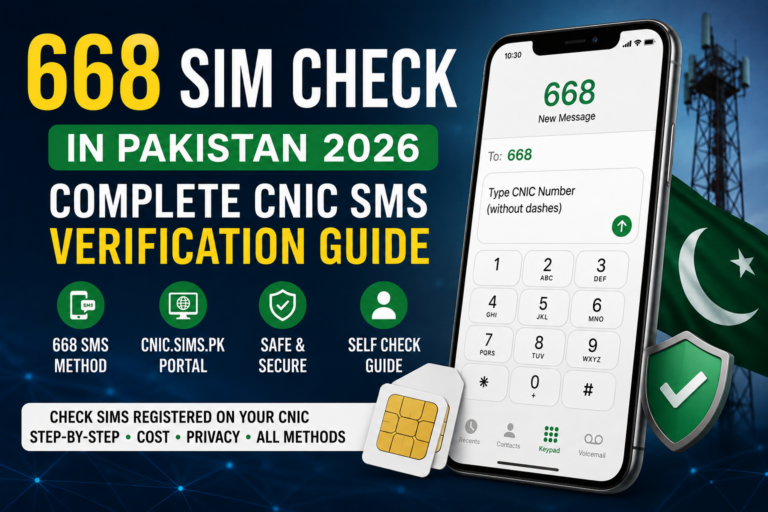
668 is used for checking SIMs issued in your own name. PTA guidance advises users to periodically check the number of SIMs issued against their identity and use 668 for this purpose.
This makes 668 particularly useful when you suspect that an unfamiliar SIM may be registered against your identity.
CNIC-Based SIM Information Portal
The official SIM Information System allows users to enter their CNIC and check the total number of SIMs registered against it. The portal also provides a separate option for foreign nationals using a Foreign ID.
This is different from entering another person’s mobile number to obtain private subscriber information.
76367 Network Check
The official SIM Information System states that you can check the network of a mobile number by sending:
N 03xx3456789
to 76367. The portal currently states a charge of Rs. 2 + tax for this service.
This is a network-identification method, not a public database for retrieving confidential owner information.
Mobile Operator Support
For problems involving your own SIM, such as registration, replacement, blocking, or account-related concerns, the relevant mobile operator is another appropriate channel.
The important principle is simple: use the method that matches the information you actually need rather than assuming that every SIM-related question can be answered through a mobile-number lookup.
What You Can Actually Verify From a Mobile Number
A mobile number can help you identify or investigate certain SIM-related information, but the type of information available depends on the verification method and the purpose of the check.
Network Information
One useful number-based check is identifying the mobile network associated with a number. This is different from obtaining the subscriber’s private identity information.
Network information can help when you need to determine which operator is handling a particular number before contacting the relevant customer-support channel.
Your Own SIM Registration
If the number belongs to you, the more important question is whether your SIM is correctly registered under your own identity.
PTA guidance recommends periodically checking the number of SIMs issued in your name through 668 and taking action if you find an illegally issued SIM.
This makes number-based research useful as part of a wider SIM registration verification process rather than as a general public-owner lookup.
Operator-Level Information
For an active SIM that belongs to you, the relevant mobile operator may be able to assist with account-specific matters. These can include registration problems, replacement, blocking, or other service issues.
If the number is unfamiliar, the operator can also tell you what procedure is available for investigating the issue. For telecom complaints that require escalation, PTA provides a Complaint Management System for consumers.
What a Number Does Not Automatically Reveal
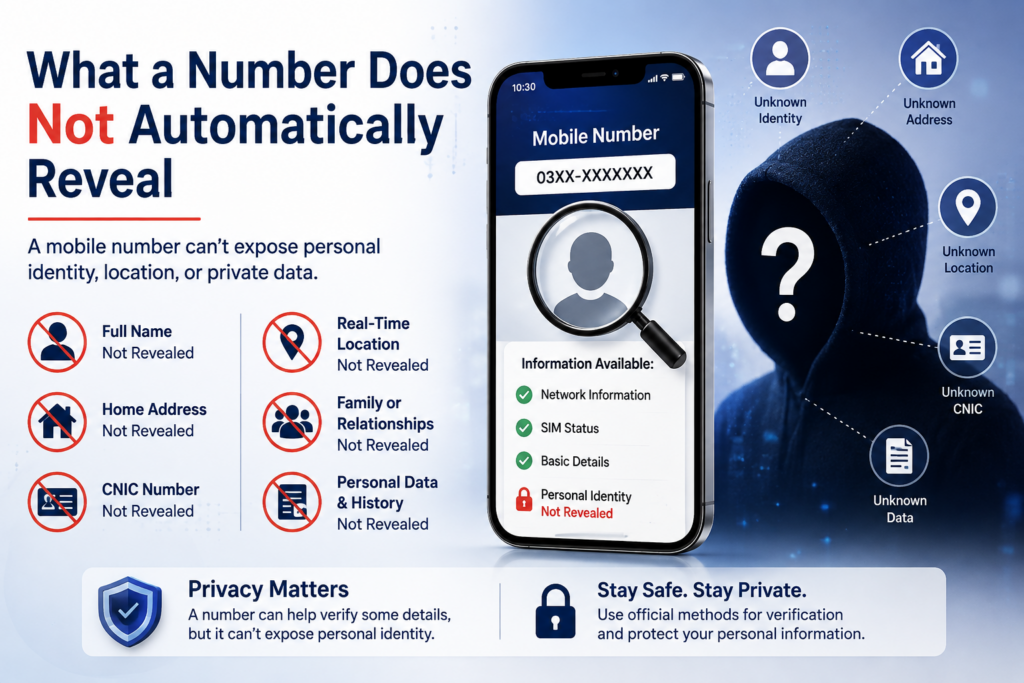
Having a mobile number does not mean that you should expect unrestricted access to:
- Another subscriber’s CNIC
- Private address information
- Biometric records
- Confidential account records
- Private telecom databases
- Real-time location information
Therefore, a website promising all of these details from a single number deserves careful scrutiny.
Why Verification Matters
SIM-related information can also become relevant to security problems such as SIM swapping, where an attacker attempts to take control of someone else’s mobile number. PTA recommends protecting personal information and contacting the mobile provider promptly if calls or messages unexpectedly stop.
The practical rule is simple: use a mobile number to begin the appropriate verification process, not as a shortcut to someone else’s private information.
Official Verification Channels: Which One Should You Use?
Choosing the correct verification method is important because SIM Owner Details by Number can refer to several different situations. The safest approach is to start with the information you already have and then use the channel designed for that particular purpose.
If You Want to Check SIMs on Your CNIC
If your concern is whether SIM connections have been issued against your own CNIC, use the recognized SIM-checking process rather than an unofficial number-lookup website.
PTA guidance specifically recommends periodically checking the number of SIMs issued in your name through 668 and taking action if you discover an illegally issued connection.
This is particularly useful if you suspect that a SIM was registered without your knowledge.
If You Need Network Information
If your main question is which mobile network a number belongs to, use the applicable network-checking facility rather than trying to obtain private subscriber information.
Network identification and subscriber identity are two separate things. Knowing the operator does not automatically provide access to the customer’s confidential registration record.
If the SIM Is Your Own
For problems involving your own active SIM, the relevant mobile operator is an appropriate starting point.
This can include situations involving:
- SIM replacement
- Blocking
- Registration problems
- Ownership-related requests
- Account assistance
- Unexpected loss of service
Keeping the issue within an authorized channel also reduces the risk of handing personal information to an unknown third party.
If You Find an Unauthorized SIM
An unfamiliar SIM connected to your identity should be treated seriously. PTA’s guidance recommends checking SIMs issued in your name and blocking illegally issued connections.
Do not try to investigate the suspected subscriber through an unofficial database. Instead, use the proper operator and regulatory procedures available for your own registration.
If Your Number Suddenly Stops Working
Unexpected loss of calls or texts can sometimes be a warning sign of SIM-swapping fraud. PTA advises contacting your wireless provider immediately if calls or messages unexpectedly stop without an obvious reason.
This is another reason to keep your SIM registration information accurate and your personal details protected.
The right verification channel depends on the problem: CNIC registration, network identification, account support, or a security concern each requires a different approach.
How to Verify a SIM When You Only Have the Mobile Number
Having a mobile number does not automatically give you access to the subscriber’s complete registration record. The useful approach is to determine what you actually need to verify and then choose the appropriate channel.
Check the Mobile Network
If your main purpose is to identify the network associated with a number, the official SIM Information System provides a network-checking method through 76367. Its current instructions say to send N 03xx3456789 to 76367, with a stated charge of Rs. 2 + tax.
This can help you identify the relevant operator before contacting its customer-support channel.
Check Your Own SIM Registration
If the number is yours and you want to know whether your SIM connections are correctly associated with your identity, the more appropriate route is a CNIC-based SIM check.
The official SIM Information System allows a user to enter their CNIC and view the total number of SIMs registered against it.
PTA guidance also recommends periodically checking the number of SIMs issued in your name through 668 and blocking illegally issued SIMs if you discover one.
Contact the Operator for Account-Specific Problems
Some questions cannot be answered through a general number check. If you need help with your own SIM’s activation, replacement, blocking, registration, or account status, contact the relevant mobile operator.
If the matter becomes a telecom complaint that requires escalation, PTA’s Complaint Management System allows consumers to submit and track complaints related to telecommunications services.
Remember the Difference
Mobile number → network identification
Your CNIC → SIM registration count
Your operator → account-specific assistance
PTA → applicable telecom complaints
This distinction keeps SIM Owner Details by Number searches focused on information that can actually be verified through appropriate channels rather than unsupported private-data lookup claims.
Understanding the Limits of Number-Based SIM Verification
A mobile number can be a useful starting point, but it should not be treated as a universal key to every detail connected with a subscriber. The information available depends on the official service being used and whether you are checking your own registration or simply identifying a network.
A Number Can Identify Its Network
Pakistan’s official SIM Information System provides a method for checking the network associated with a mobile number through 76367. The current portal instructs users to send N 03xx3456789 to 76367 and lists a charge of Rs. 2 + tax.
This is useful when you need to know which operator handles a number, but it does not turn the service into a public subscriber directory.
Your Own Registration Is a Different Check
If your goal is to find SIMs registered against your own CNIC, the official portal provides a separate CNIC-based check. It displays the number of registered SIMs according to network categories.
PTA guidance also recommends periodically checking SIMs issued in your name through 668 and taking action if an unauthorized SIM is discovered.
This distinction is important for anyone searching SIM Owner Details by Number: a number-based network check and a CNIC-based registration check serve different purposes.
Private Information Should Not Be Assumed Public
Telecom information can include sensitive personal data. PTA’s telecom-data regulations classify information such as names, addresses, CNIC numbers, phone numbers and other identifying details as personal data.
Therefore, a website claiming that any mobile number can instantly reveal a complete private subscriber record should be evaluated carefully.
Use the Right Verification Route
A practical approach is:
Need the network? → Use the applicable network-checking method.
Need your own SIM count? → Use the CNIC-based SIM Information System or applicable 668 procedure.
Have an account-specific SIM problem? → Contact the relevant mobile operator.
Have a telecom complaint? → Use the appropriate official complaint channel.
This keeps SIM Owner Details by Number focused on information that can actually be verified through legitimate channels rather than unsupported database claims.
How Official SIM Verification Differs From Online Lookup Claims
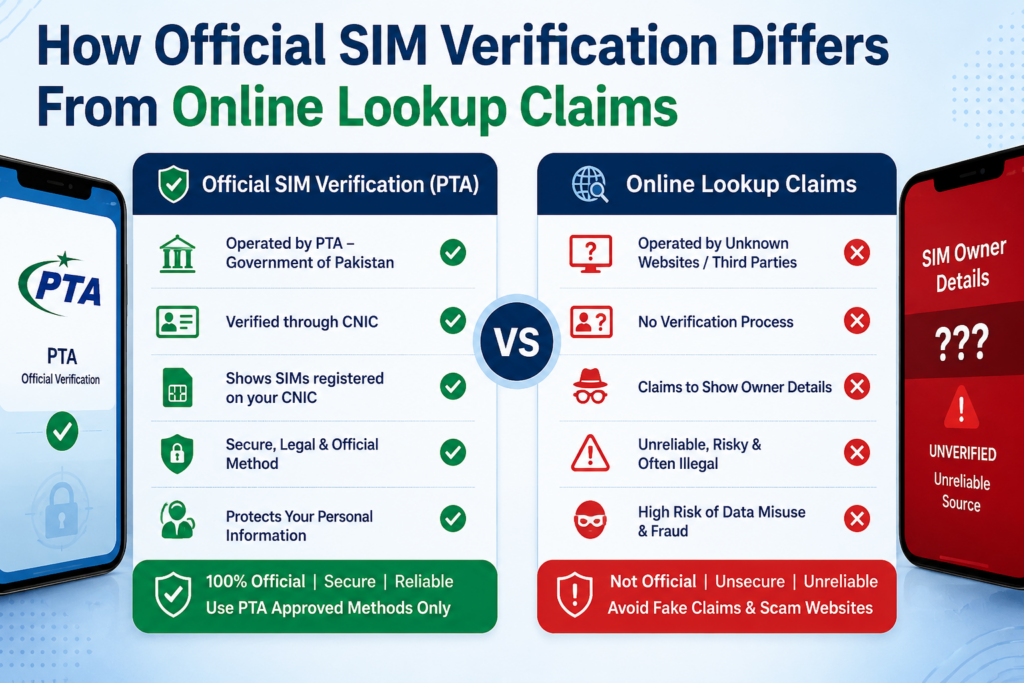
When searching for SIM Owner Details by Number, users may encounter websites that present a simple number-search box and promise extensive subscriber information. The presence of such a tool does not establish that it has access to an official telecom database.
Official Verification Has a Defined Purpose
The official SIM Information System clearly separates its available checks. Users can enter their own CNIC to find the total number of SIMs registered against it, while a separate facility is provided for checking the network of a number through 76367.
This defined purpose is an important distinction from websites claiming to reveal an entire subscriber profile from any mobile number.
A Search Box Does Not Prove Database Access
An unofficial website may display fields such as:
- Mobile number
- CNIC
- Owner name
- Search button
- “Live database” wording
But these features alone do not demonstrate that the service is connected to an authorized telecom system.
Users should therefore avoid assuming that a result displayed by a third-party site is accurate, current, or officially sourced.
Protect Your Personal Information
PTA’s telecom security framework emphasizes protecting critical telecom data from unauthorized disclosure.
This is especially relevant when an unfamiliar service asks for your CNIC, OTP, account credentials, or other sensitive information before showing supposedly free SIM Owner Details.
Use the Official Route for Your Own Information
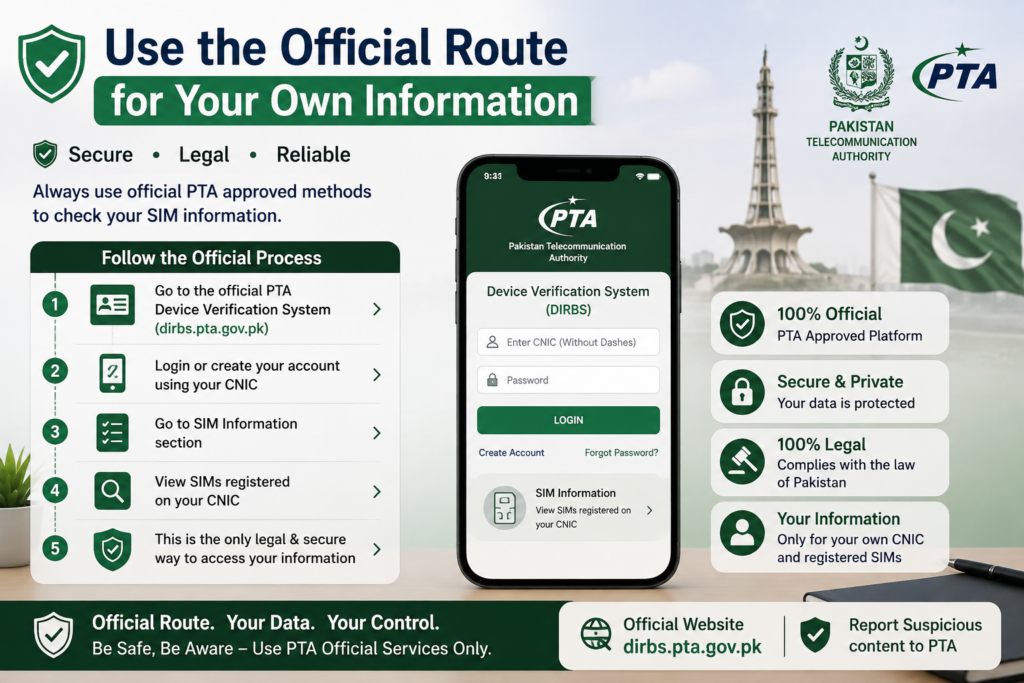
If your purpose is to check your own SIM registrations, use the official CNIC-based system or the applicable 668 procedure.
If your purpose is network identification, use the designated network-checking method.
If you have an account or registration problem, contact the relevant mobile operator.
And if a telecom issue requires regulatory intervention, PTA’s Complaint Management System provides a channel for registering and tracking telecom complaints.
The key difference is simple: official services have a defined verification purpose, while an online lookup claim should never be treated as official merely because it produces a result.
Can You Get the SIM Owner’s Name From a Number?
One of the most common searches around SIM Owner Details by Number is whether a person’s name can be obtained simply by entering their mobile number.
The answer depends on whose information you are trying to verify and which service you are using.
Your Own SIM Information
If the mobile number belongs to you, you can use the appropriate official SIM-verification channels to check information connected with your own registration.
The official SIM Information System provides a CNIC-based facility for checking the total number of SIMs registered against your CNIC.
PTA guidance also recommends periodically checking SIMs issued in your own name through 668 and taking action if an unauthorized SIM is discovered.
Another Person’s Number
A mobile number should not be treated as a public gateway to another subscriber’s complete identity record.
PTA’s telecom-data regulations classify information such as a person’s name, address, CNIC number and phone number as personal data.
Therefore, a website claiming that you can enter any Pakistani mobile number and instantly receive a complete private subscriber profile should be approached carefully.
Why Unofficial Results Can Be Misleading
Some third-party services may display a name or other information after a number search. That result alone does not prove that the information is current, accurate, or obtained from an authorized telecom source.
For legitimate verification, use the method designed for the specific purpose instead of relying on an unknown database.
What You Can Do Instead
If you have a particular number and need to investigate it:
- Need the network? Use the applicable network-checking facility.
- Need to check your own SIM registrations? Use the CNIC-based SIM Information System or applicable 668 process.
- Have an issue with your own SIM? Contact the relevant mobile operator.
- Have a telecom complaint? Use PTA’s official complaint channel.
The official SIM Information System currently states that the network of a number can be checked through 76367 using the prescribed SMS format.
The key point is that SIM Owner Details by Number should not be confused with unrestricted access to another subscriber’s private identity information.
When a Number Belongs to Someone Else
Searching SIM Owner Details by Number becomes more sensitive when the number does not belong to you. A useful distinction is whether you are trying to solve a legitimate telecom problem or simply obtain another subscriber’s private information.
If You Received an Unknown Call
If an unfamiliar number contacts you, you do not need to obtain the person’s confidential SIM registration record to decide how to respond.
You can:
- Avoid sharing personal information
- Block unwanted calls
- Keep evidence of suspicious messages
- Contact your operator if the issue involves your own SIM
- Report serious telecom or cybercrime concerns through the appropriate official channel
If You Suspect Fraud
An unfamiliar number may be relevant to a scam, phishing attempt, or other suspicious activity. In that situation, focus on the incident itself rather than trying to obtain private subscriber information through an unofficial database.
PTA’s cybercrime guidance recommends protecting personal information and taking precautions against illegally issued SIMs. It also advises users to periodically check the SIMs issued in their own name through 668.
If the Number Is Your Own
The situation is different when you are checking a number that belongs to you.
For your own registration, the official SIM Information System allows a CNIC-based check of the total SIMs registered against your CNIC.
If you need network information for a number, the same portal provides a 76367 network-checking method.
Avoid Unofficial Owner-Lookup Claims
A website that promises a complete name, CNIC, address, or other confidential information from any mobile number should not automatically be considered an official verification service.
PTA’s telecom security framework requires critical telecom data to be protected from unauthorized disclosure.
The safer principle is straightforward: verify your own SIM information through the appropriate official channel and handle another person’s information with respect for privacy.
If a telecom matter requires a formal complaint, PTA’s Complaint Management System provides a channel for registering and tracking complaints.
What to Do If You Need to Verify an Unfamiliar Number
If you have a mobile number that you do not recognize, the correct next step depends on why you need to check it. A number alone does not provide a public route to another subscriber’s complete registration record.
If You Only Need the Network
For a number whose network you want to identify, the official SIM Information System currently provides a 76367 method. The portal instructs users to send N 03xx3456789 to 76367 for the network check.
This can be useful when you need to determine which operator to contact.
If You Think the Number Is Registered to You
If you suspect that an unfamiliar SIM may actually be registered against your own CNIC, use the CNIC-based SIM checking system rather than trying to identify the person using an unofficial database.
The official portal allows users to check the total number of SIMs registered against their CNIC.
PTA has also advised consumers to verify SIMs registered against their CNIC through cnic.sims.pk or 668 and to approach the relevant service provider if a SIM was issued without their knowledge or consent.
If the Number Is Involved in Suspicious Activity
If an unfamiliar number is connected with spam, fraud, threats, or another serious issue, preserve relevant evidence such as messages, call records, or screenshots.
Do not attempt to obtain private subscriber information from an unverified SIM Owner Details by Number website. Instead, use the appropriate operator, regulatory, or complaint channel for the particular situation.
If You Simply Want the Person’s Identity
This is where number-based searches are commonly misunderstood.
A mobile number should not be treated as a public key for retrieving another person’s complete CNIC, address, biometric information, or confidential telecom record. Official self-check systems are designed around authorized verification rather than unrestricted public subscriber lookup.
The safest approach is therefore:
Unknown number → identify the network if necessary → determine whether it concerns your own registration → use the appropriate official channel.
That keeps your SIM Owner Details by Number search useful without exposing your own information or attempting to access someone else’s private records.
Which Official Method Fits Your Situation?
When dealing with SIM Owner Details by Number, choosing the correct method is more useful than trying multiple unrelated lookup services. Each official route serves a different purpose.
For SIMs Registered to Your CNIC
If you want to know how many SIMs are registered against your own CNIC, use the official SIM Information System or the applicable 668 procedure. The official portal is specifically designed to show the total SIMs associated with a CNIC.
For Checking a Number’s Network
If you only need to identify the network associated with a mobile number, the official portal currently provides a 76367 option. It instructs users to send N 03xx3456789 to 76367 for the network check.
This tells you the relevant network; it is not a complete subscriber-information lookup.
For a SIM Problem
If the issue concerns your own SIM—such as an unauthorized registration, replacement, blocking, or account problem—the relevant mobile operator should normally be your first contact.
If a telecom complaint needs escalation, PTA’s Complaint Management System provides a channel for registering and tracking complaints.
For Security Concerns
If your phone suddenly stops receiving calls or SMS without explanation, take the situation seriously. PTA’s SIM-swapping advisory recommends contacting your wireless provider immediately in such circumstances.
The simple rule is: CNIC check for your registrations, 76367 for network information, your operator for SIM/account issues, and PTA for applicable telecom complaints.
Official SIM Information System
Common Mistakes When Checking SIM Owner Details by Number
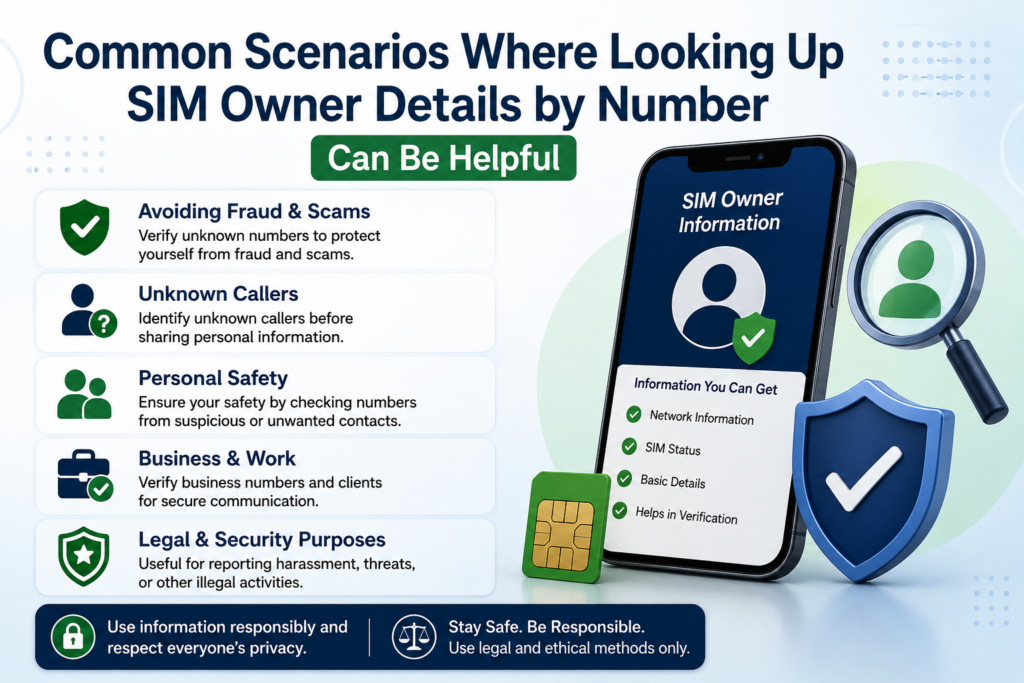
People searching for SIM Owner Details by Number can easily choose the wrong verification method or trust information that has not been properly verified. Avoiding a few common mistakes makes the process safer and more useful.
Mistake 1: Treating Every Number Lookup as an Owner Check
A mobile-number check may provide network-related information, but that does not mean it provides a complete subscriber identity record.
The official SIM Information System separately provides CNIC-based SIM checking and a network-checking facility for mobile numbers.
Mistake 2: Using an Unofficial Database
A website claiming to have a “live SIM database” should not automatically be considered an official source.
Before entering your CNIC, OTP, or other sensitive information, verify who operates the service and what information it is actually authorized to provide.
Mistake 3: Confusing Network With Ownership
Knowing that a number belongs to a particular mobile network does not establish that you have access to the subscriber’s private registration details.
The official portal specifically describes its 76367 facility as a way to check the network of a number.
Mistake 4: Checking Someone Else’s Information
A search for SIM Owner Details by Number should not become an excuse to seek confidential information about another subscriber.
For your own SIM registrations, use the appropriate CNIC-based verification route. The official system is designed to show the total SIMs registered against the entered CNIC.
Mistake 5: Assuming an Online Result Is Always Current
Telecom information and procedures can change. If a result or instruction comes from an old article, social-media post, or unknown website, confirm important details through the current official source before acting.
The safest approach is to identify your exact purpose first, then use the official method designed for that purpose.
Which SIM Verification Method Should You Use?
Searching SIM Owner Details by Number does not always mean using the same checking method. The best option depends on whether you want to identify a network, review your own registrations, or resolve a SIM-related problem.
Use the CNIC Method for Your Own SIM Registrations
If you want to know how many SIMs are registered against your own CNIC, use the official SIM Information System. Its current portal allows users to enter their CNIC and check the total number of registered SIMs.
This is the appropriate route when your concern is your own SIM registration record.
Use 76367 for Network Information
If you only want to determine the network associated with a mobile number, the official portal currently provides a separate method through 76367. It instructs users to send N 03xx3456789 to that number, with a listed charge of Rs. 2 + tax.
This is a network check, not a complete owner-information lookup.
Contact Your Operator for SIM Problems
If the issue involves your own SIM—such as replacement, blocking, registration, or account assistance—the relevant mobile operator is the appropriate starting point.
For a telecom complaint that needs escalation, PTA’s Complaint Management System provides a channel for consumers to register and track complaints.
Protect Your Information
Be careful with websites promising extensive SIM Owner Details by Number results. PTA’s telecom security framework requires critical telecom data to be protected from unauthorized disclosure.
The practical rule is simple:
Own CNIC registration → CNIC-based SIM check
Number’s network → 76367
Own SIM/account problem → Mobile operator
Telecom complaint → PTA
Choosing the correct method keeps the verification process focused, safer, and more useful.
How to Protect Your SIM Information During Verification
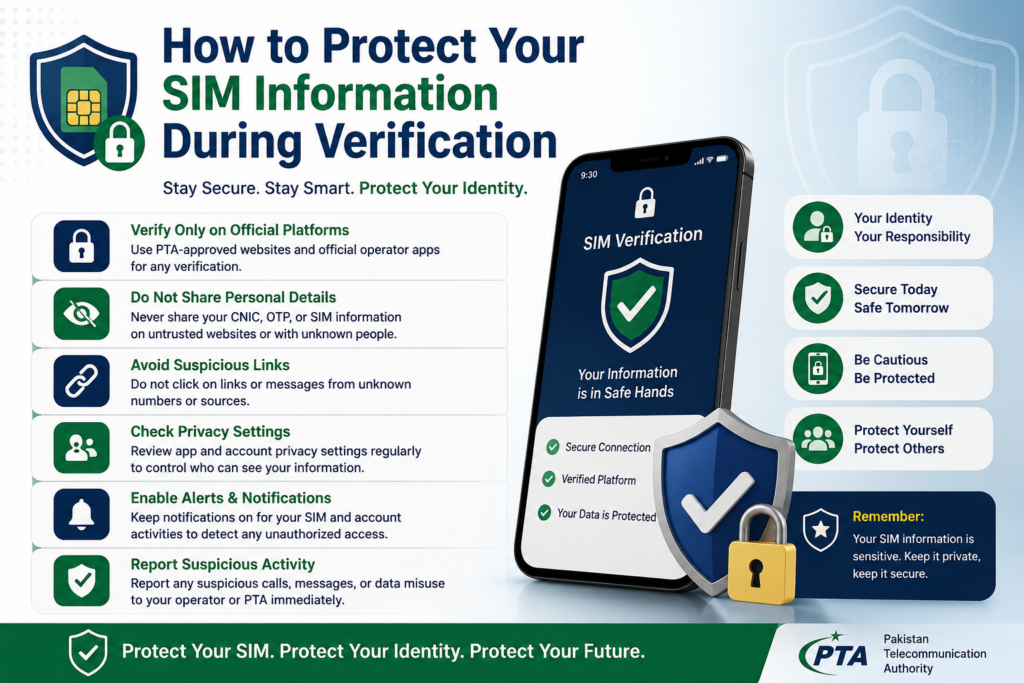
When checking SIM Owner Details by Number, protecting your own information is just as important as finding the correct verification method. A legitimate check should not require you to expose unnecessary personal information.
Never Share OTPs
An OTP can be used to verify access to a mobile account or online service. Never provide an OTP to an unknown caller, website, or person claiming to perform a SIM check on your behalf.
Be Careful With CNIC Information
If you are checking SIM registrations associated with your own identity, use the appropriate official channel. The official SIM Information System provides a CNIC-based facility for checking the total number of SIMs registered against your CNIC.
Avoid entering your CNIC into an unfamiliar website simply because it promises instant SIM Owner Details by Number.
Watch for SIM-Swap Warning Signs
Unexpected loss of calls or SMS can sometimes indicate a SIM-swap attempt. PTA advises users to contact their wireless provider immediately if calls or texts suddenly stop without an obvious reason.
Other useful precautions include protecting account credentials and avoiding unnecessary publication of your phone number or other personal information.
Check Your Own SIM Registrations Regularly
PTA guidance recommends periodically checking the number of SIMs issued in your name through 668 and taking action if an illegally issued SIM is discovered.
This is one of the most practical ways to identify an unexpected SIM connection associated with your own identity.
Use Official Channels for Complaints
If a SIM-related issue cannot be resolved through the relevant operator, PTA’s Complaint Management System provides a channel for registering and tracking telecommunications complaints.
The safest SIM verification process is one that checks the information you are authorized to access while keeping your CNIC, OTPs, and account details protected.
How to Respond When Your SIM Information Looks Incorrect
If a check related to SIM Owner Details by Number suggests that something is wrong with your own registration, the priority should be correcting the record rather than trying to investigate the issue through an unofficial database.
An Unexpected SIM on Your CNIC
If you discover a SIM that you do not recognize among the connections registered against your CNIC, first confirm the information through the official SIM Information System.
PTA advises consumers to verify SIMs registered against their CNIC through cnic.sims.pk or 668 and to ensure that only SIMs belonging to them remain registered in their name.
Contact the Relevant Operator
Once an unfamiliar registration is confirmed, contact the mobile operator associated with the connection. The operator can guide you through the applicable process for correcting or removing a connection that you did not authorize.
Do not rely on a third-party website claiming that it can reveal the complete identity of the person using that SIM.
Keep Evidence
If you believe a SIM was registered without your knowledge, keep useful records of your verification result, relevant messages, and communications with the operator.
Having clear information about your own registration can make it easier to explain the problem when requesting assistance.
Escalate a Telecom Complaint When Necessary
If an issue cannot be resolved through the operator, PTA provides a Complaint Management System for telecom consumers. PTA has also advised users to use official channels rather than suspicious links requesting personal information.
The important principle is simple: verify your own record, contact the responsible operator, and use the official complaint route when further action is required.
How to Handle an Unauthorized SIM Registration
Finding an unfamiliar connection while checking your own SIM Owner Details by Number information can be a serious warning sign. The important thing is to verify the registration through an appropriate official channel and then take action through the relevant operator.
Confirm the Registration First
The official SIM Information System allows users to check the total number of SIMs registered against their own CNIC.
PTA guidance also recommends periodically checking the SIMs issued in your name through 668 and blocking an illegally issued SIM.
Identify the Relevant Network
Once you know that an unexpected SIM exists under your identity, determine which network is associated with the connection. This helps you approach the correct mobile operator rather than using an unrelated third-party service.
Contact the Mobile Operator
Take the issue to the relevant operator and explain that the connection is not recognized by you. Follow the operator’s current procedure for investigation, blocking, disowning, or correcting the registration.
Do not attempt to identify the person using the SIM through an unofficial SIM database.
Keep Your Verification Evidence
Keep a record of the information you discovered during your own verification. Screenshots, dates, and relevant operator communications can be useful if you later need to explain the issue or escalate a complaint.
If the matter cannot be resolved through the operator, PTA’s Complaint Management System provides a way for telecom consumers to submit and track complaints.
Protect Your Identity
An unauthorized SIM registration is also a reminder to protect your CNIC, biometric information, OTPs, and account credentials. Never provide these details to an unknown service claiming that it can reveal SIM Owner Details by Number.
The correct response is to verify your own registration, contact the responsible operator, preserve useful evidence, and use the official complaint route when escalation is necessary.
Can SIM Owner Details Be Verified Through the Number Alone?
A mobile number can be the starting point for a SIM-related check, but SIM Owner Details by Number should not be understood as unrestricted access to a subscriber’s complete registration record.
What the Number Can Help You Check
The current official SIM Information System provides a facility for checking the network associated with a mobile number. Its instructions specify sending N 03xx3456789 to 76367, with a listed charge of Rs. 2 + tax.
This is useful when you need to determine which network is associated with a number before contacting the relevant operator.
What Requires CNIC-Based Verification
If your actual goal is to find out how many SIMs are registered against your own CNIC, the official system uses a separate CNIC-based process. The portal states that users can enter their CNIC to find the total number of SIMs registered against it.
The results are presented by network, making this different from simply searching a mobile number.
Why These Checks Should Stay Separate
A number-based network check answers one question:
Which network is associated with this number?
A CNIC-based SIM check answers another:
How many SIMs are registered against my identity?
Neither should automatically be interpreted as a public lookup of another subscriber’s complete personal information.
A Better Way to Approach an Unknown Number
If you receive a call or message from an unfamiliar number, first decide what you actually need to establish.
If you only need the network, use the applicable network-checking method. If you suspect the number represents an unauthorized SIM registered against your own identity, check your CNIC-linked registrations through the official system and then contact the relevant operator if necessary.
This distinction makes SIM Owner Details by Number searches more practical while keeping personal information and verification boundaries clear.
How SIM Registration Information Is Maintained
Understanding SIM Owner Details by Number also requires understanding how SIM registration information is connected to a subscriber’s identity. A mobile number is not simply an isolated number; its registration exists within the telecom system and is subject to verification and data-protection requirements.
SIM Registration Is Linked to Identity
The official SIM Information System provides a CNIC-based facility for checking the total number of SIMs registered against a CNIC. The results can show SIM counts by network.
This is why a person checking their own SIM registrations should use the identity-based verification route rather than relying on an unofficial mobile-number database.
Subscriber Information Is Protected
PTA’s Critical Telecom Data and Cyber Security Regulations require licensees to maintain confidentiality of information disclosed by subscribers. The regulations also require protection of critical telecom data against unauthorized disclosure.
That protection is important when interpreting online claims about SIM Owner Details. A website claiming to display private subscriber information should not automatically be assumed to have authorized access to telecom records.
Registration and Network Checks Are Different
The official system separates these functions:
CNIC → check the number of SIMs registered against the identity.
Mobile number → check the associated network through the prescribed 76367 method.
Keeping these two processes separate helps users understand what a particular result actually tells them.
Keep Your Own Record Secure
If you discover an unexpected SIM registration, treat the information as a personal security matter. Do not publish your CNIC or verification results unnecessarily, and avoid sharing sensitive information with websites that promise instant owner details.
For additional protection, PTA recommends contacting your wireless provider promptly if your calls or texts unexpectedly stop, as this can be a warning sign of SIM-swapping activity.
The practical takeaway is that SIM registration information is designed for controlled verification, not unrestricted public disclosure.
What Official SIM Registration Means for Your Number
When researching SIM Owner Details by Number, it is useful to understand that SIM registration is connected with subscriber verification rather than simply creating a public directory of names and numbers.
Subscriber Verification Is Required
PTA’s cybercrime guidance explains that SIMs must be issued after proper verification and authentication of the subscriber’s credentials. It also warns against the illegal sale or provision of SIMs without the required verification.
This means that the registration process exists to establish an authorized subscriber relationship with the mobile connection.
Your SIM Record Is Part of Telecom Data
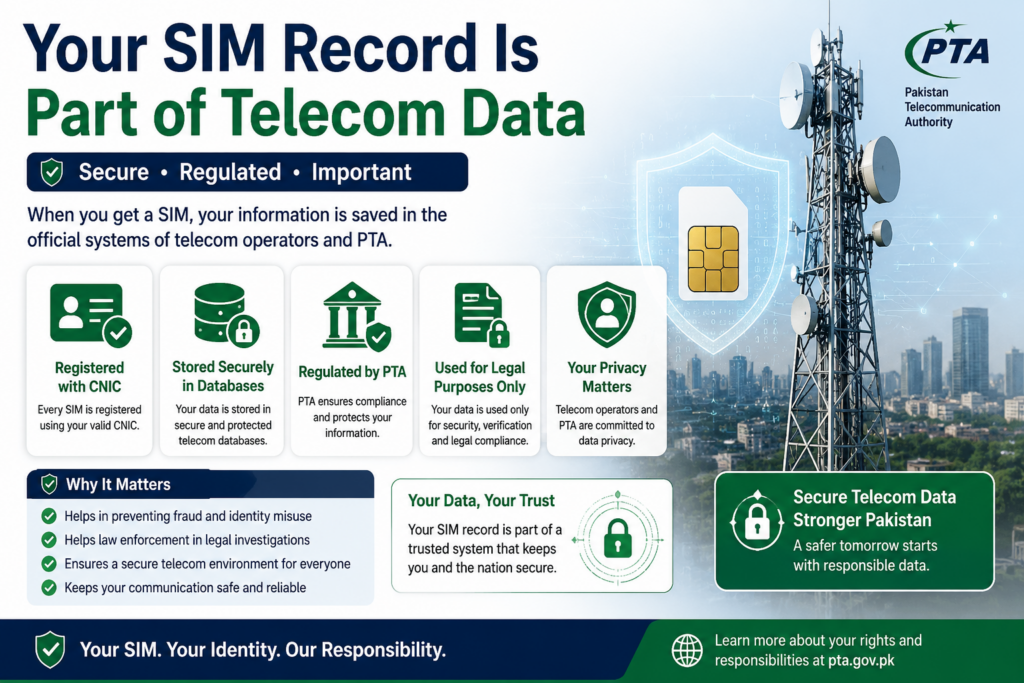
PTA’s Critical Telecom Data Regulations define personal data broadly and include information such as a person’s name, address, CNIC number, phone number and other identifying information.
For this reason, SIM Owner Details by Number should not be interpreted as permission to publicly expose another subscriber’s personal information.
Pakistan Telecommunication Authority (PTA) regulates Pakistan’s telecommunications sector and provides official information, guidance, and consumer-related services. For SIM registration, telecom security, privacy, or related verification matters, users should rely on official PTA resources rather than unverified third-party websites.
Check Your Own Registrations
PTA guidance recommends periodically checking the number of SIMs issued in your own name by sending your CNIC number to 668 and taking action against illegally issued SIMs.
This is especially useful if you believe a SIM may have been registered using your identity without authorization.
What to Do With an Unexpected Registration
If your own verification reveals a SIM you do not recognize, the appropriate response is to contact the relevant cellular operator and follow its current procedure for resolving the registration issue.
If the matter develops into a formal telecom complaint, PTA’s Complaint Management System provides a mechanism for consumers to submit and manage complaints.
The important distinction is simple: SIM registration establishes an authorized subscriber connection; it does not make the subscriber’s personal record a public number-lookup database.
SIM Registration, Identity & Number Verification
Understanding the registration side of SIM Owner Details by Number helps explain why different verification methods provide different types of information.
SIM Registration Requires Subscriber Verification
PTA guidance explains that SIMs should be issued only after the subscriber’s required credentials have been properly verified and authenticated. It also warns against the illegal issuance or sale of SIMs without the required verification.
This means the mobile number is connected to a verified subscriber relationship rather than functioning as an unrestricted public identity record.
Personal Telecom Information Is Protected
PTA’s Critical Telecom Data regulations define personal data broadly, including information such as a person’s name, address, CNIC number, and phone number. The regulations apply security requirements to telecom licensees handling critical telecom data.
For someone searching SIM Owner Details by Number, this distinction is important: having a number does not automatically mean that the private identity information associated with it should be publicly accessible.
Check Your Own SIM Connections
If you are concerned that a SIM may have been issued using your identity, PTA advises consumers to periodically check the number of SIMs issued in their name through 668 and take action against an illegally issued connection.
This is a much more useful approach than relying on an unknown website claiming to provide complete owner information from a number.
Protect Your Number From SIM-Swap Fraud
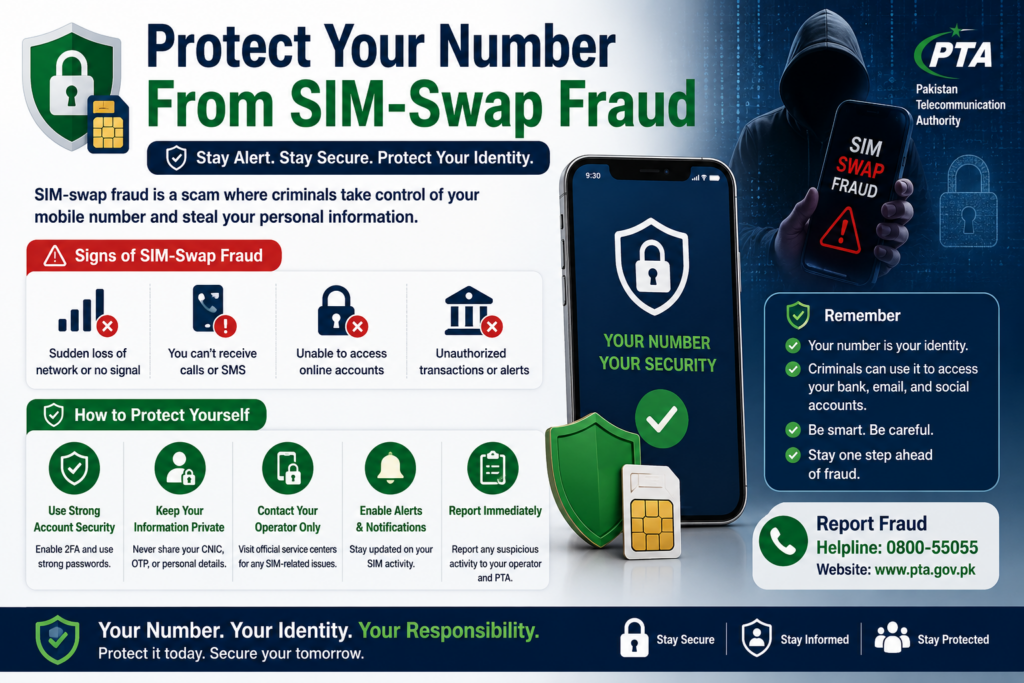
Your mobile number is also important for account security. PTA’s SIM-swapping advisory recommends protecting personal information, strengthening mobile-account security, and contacting your wireless provider immediately if calls or texts suddenly stop without an obvious reason.
The key takeaway is simple: SIM registration establishes a verified subscriber connection, while private subscriber information remains subject to appropriate security and access controls.
SIM Ownership Verification and Privacy Boundaries
For anyone researching SIM Owner Details by Number, it is important to understand that telecom verification and personal-data access are not the same thing. Official systems provide specific checks, while subscriber information remains subject to privacy and access controls.
Official Verification Has a Defined Scope
The current SIM Information System allows a user to check the total number of SIMs registered against their CNIC. It also provides a separate method for checking the network of a mobile number through 76367.
These functions answer specific questions rather than providing unrestricted access to a subscriber’s complete profile.
Personal Telecom Data Requires Protection
PTA’s telecom security framework states that critical telecom data should be protected against unauthorized disclosure, modification, loss, and destruction. It also requires customer information to be used for the purpose for which it was obtained.
This is an important consideration when evaluating websites that claim to provide complete SIM Owner Details by Number.
Be Careful With SIM Lookup Websites
A website may display a number-search form and produce a name or other information, but the appearance of a result does not establish that the information comes from an authorized telecom source.
Avoid entering unnecessary CNIC details, OTPs, passwords, or other sensitive information into an unfamiliar SIM-checking service.
Protect Your Number From SIM-Swap Risks
Your mobile number can also be connected to important accounts. PTA’s SIM-swapping advisory recommends protecting personal information and contacting your wireless provider immediately if you unexpectedly stop receiving calls or texts.
For your own registration concerns, use the official checking system and contact the relevant operator when further action is needed.
The safest approach is to verify information you are authorized to access while treating another subscriber’s personal information as private.
What a Mobile Number Can Tell You About Its SIM
A mobile number can be useful for starting a verification process, but it does not provide unlimited access to subscriber information. For SIM Owner Details by Number, the first step is to separate information that can be officially checked from information that remains private.
Network Identification
The official SIM Information System currently provides a method for checking the network associated with a mobile number through 76367. The portal instructs users to send N 03xx3456789 to 76367 and lists a charge of Rs. 2 + tax.
This can help you determine which operator is associated with a number before seeking further assistance.
Your Own Registration Status
If you are concerned about a number that belongs to you, the more relevant check is your own CNIC-linked SIM registration.
The official portal allows users to enter their CNIC and check the total number of SIMs registered against it, with results organized by network.
PTA guidance also recommends periodically checking SIMs issued in your name through 668 and blocking illegally issued SIMs.
What the Number Does Not Reveal Publicly
A mobile number should not be treated as a public key for retrieving another person’s complete identity record. PTA regulations classify information such as names, addresses, CNIC numbers, phone numbers and other identifying information as personal data.
Therefore, claims that a normal number search can automatically reveal confidential subscriber records should be approached carefully.
The Practical Difference
Think of the process this way:
Mobile number → Network information
Your CNIC → SIM registration information
Your operator → Account-specific assistance
Keeping these purposes separate makes SIM Owner Details by Number searches more accurate and prevents users from confusing a legitimate verification service with an unofficial private-data lookup.
SIM Owner Details by Number: Official Verification & Privacy
A mobile number can start a verification process, but the type of information available depends on the purpose of the check. Pakistan’s official SIM Information System separates CNIC-based SIM checking from mobile-number network checking.
Your Own SIM Registration
If you want to determine whether SIMs are registered against your own CNIC, use the official SIM Information System or the applicable 668 service. PTA advises consumers to verify SIMs registered against their CNIC and ensure that only required connections remain associated with their name.
Checking a Number’s Network
If you only need to identify the current network of a mobile number, the official portal provides the 76367 method. It currently instructs users to send N 03xx3456789 to 76367 for the network check.
This is useful for determining the operator, but it should not be confused with retrieving the subscriber’s private identity record.
When the Number Is Your Own
For an active SIM in your possession, account-specific questions should be handled through the relevant mobile operator. This is the appropriate route for matters such as registration problems, replacement, blocking, or other subscriber-service issues.
When the Number Belongs to Someone Else
A mobile number should not automatically be treated as a public lookup key for another person’s confidential CNIC, address, biometric information, or telecom records.
If the number is connected with fraud, harassment, or another serious incident, preserve relevant evidence and use the appropriate complaint or reporting channel rather than relying on an unofficial database.
The Simple Rule
Think of SIM Owner Details by Number in three layers:
Mobile number → network verification
Your CNIC → your registered SIM information
Your operator → account-specific SIM assistance
This distinction keeps the checking process practical while protecting subscriber privacy.
Official SIM Verification Has Different Purposes
When researching SIM Owner Details by Number, it is important to match the verification method with the question you actually want answered. Pakistan’s official SIM Information System currently separates CNIC-based SIM checking from mobile-number network checking.
CNIC-Based SIM Check
If you want to know how many SIMs are registered against your own CNIC, the official SIM Information System provides a dedicated CNIC check. The results can show the number of SIMs associated with different networks.
This is the appropriate route when your concern is your own registration record.
Number-Based Network Check
If you already have a mobile number and only need to identify its network, the same official portal provides a separate 76367 method. It currently instructs users to send N 03xx3456789 to 76367 for the network check, with a listed charge of Rs. 2 + tax.
A network result should not be interpreted as a complete subscriber profile.
Operator Support for Account Issues
Some SIM questions require access to your specific mobile account rather than a general checking service. For matters such as SIM replacement, blocking, registration problems, or other account-related requests, the relevant mobile operator is the appropriate channel.
This is also safer than entering personal information into an unknown website advertising instant SIM Owner Details by Number.
Why Privacy Matters
PTA’s telecom security framework requires critical telecom data to be protected from unauthorized disclosure and states that customer data should be used for the purpose for which it was obtained.
PTA regulations also require licensees to maintain the confidentiality of information disclosed by subscribers.
Therefore, a number-search website should not automatically be assumed to have authorized access to confidential subscriber information.
Choose the Correct Route
Your CNIC → check your registered SIM count
Mobile number → check its network
Your SIM/account → contact the relevant operator
Telecom complaint → use the appropriate official complaint channel
This separation makes SIM Owner Details by Number easier to understand and helps users avoid confusing legitimate verification with unofficial private-data lookup claims.
Official Sources to Use for SIM Owner Details by Number
When researching SIM Owner Details by Number, it is better to rely on the source that actually provides the relevant service. Different telecom questions require different official channels.
SIM Information System
The official SIM Information System provides a CNIC-based facility for checking the total number of SIMs registered against your CNIC. It also provides a separate method for checking the network of a mobile number through 76367.
This makes it one of the most relevant sources when verifying your own SIM registration information.
PTA Complaint Management System
If a SIM or telecom issue cannot be resolved through the relevant operator, PTA’s Complaint Management System allows consumers to register and track telecommunications complaints.
Use this route for an actual telecom complaint rather than relying on an unofficial SIM database.
PTA Cybersecurity Guidance
PTA’s cybersecurity material is also useful for understanding SIM-related security risks. Its guidance covers issues such as unauthorized SIM activity and recommends appropriate precautions for protecting subscriber information.
Why Official Sources Matter
Official sources help you distinguish between:
SIM registration checking → official SIM Information System
Network identification → applicable 76367 method
Telecom complaint → PTA Complaint Management System
SIM security → PTA cybersecurity guidance
When a website claims to provide extensive SIM Owner Details by Number, compare its claims with what the official systems actually provide.
For your own SIM information, always start with the official verification route rather than an unknown database.
What to Do If You Find an Unauthorized SIM
Discovering an unfamiliar SIM while checking your own SIM Owner Details by Number information can be an important warning sign. The priority should be protecting your identity and getting the registration issue handled through the appropriate official channel.
First Confirm Your Own Registration
Before taking action, verify that the unexpected connection is actually associated with your own CNIC. PTA guidance recommends checking the SIMs issued in your name through the recognized 668 process and taking action if an illegally issued SIM is identified.
The official SIM Information System also provides a CNIC-based facility for checking the total number of SIMs registered against your identity. This is different from trying to identify the private subscriber behind an unfamiliar number.
Identify the Relevant Network
Once you confirm that an unfamiliar SIM appears under your identity, determine which mobile network is associated with the connection. Knowing the operator helps you approach the correct service provider instead of relying on an unofficial SIM database.
If you are checking only the network of a particular mobile number, the official SIM Information System provides the 76367 network-checking method.
Contact the Mobile Operator
After confirming an unauthorized registration, contact the relevant mobile operator and explain that the connection is not yours.
Depending on the circumstances, the operator may have procedures for:
- Investigating the registration
- Blocking an unauthorized SIM
- Disowning a connection
- Correcting registration information
- Completing additional identity verification
Use the operator’s current official procedure rather than paying an unknown website to “remove” or “trace” the SIM.
Keep Evidence of the Problem
If you discover an unexpected registration, keep useful records of your verification result. A screenshot, date of discovery, relevant SMS messages, and communications with the operator can help you explain what happened.
Do not publish your complete CNIC or other sensitive information online when sharing evidence.
Escalate If Necessary
If the relevant operator does not resolve a legitimate telecom complaint, PTA’s Complaint Management System provides a channel for consumers to register and track complaints. PTA also provides cybersecurity guidance for protecting telecom information and responding to security concerns.
The important principle is straightforward: verify your own registration, contact the responsible operator, preserve relevant evidence, and use the official complaint route when escalation is necessary.
This is a much safer approach to SIM Owner Details by Number than attempting to obtain another person’s private information through an unofficial database.
SIM Owner Details by Number: Privacy & Security Checklist
When searching for SIM Owner Details by Number, users should think about security as well as verification. A SIM is connected to a mobile account, and that number may also be used for OTPs, account recovery, banking notifications, and other important services.
Protect Your CNIC
Your CNIC should only be entered where it is genuinely required for an authorized verification process. Avoid submitting it to random websites that promise instant SIM owner information.
For your own registration, use the recognized CNIC-based SIM checking facility rather than an unofficial database.
Never Share OTPs
An OTP should remain private. A person claiming to be a telecom representative, SIM agent, or verification service should not automatically be trusted with your verification code.
If someone asks for an OTP while claiming they can provide SIM Owner Details by Number, stop the process and verify the request through the relevant official channel.
Be Careful With Suspicious Links
Avoid clicking unfamiliar links received through SMS, WhatsApp, social media, or email when they claim to provide SIM information.
PTA has repeatedly emphasized using official platforms for telecom-related services and exercising caution with deceptive links.
Watch for SIM-Swap Warning Signs
A sudden and unexplained loss of mobile service can be a security warning. PTA’s SIM-swapping advisory recommends contacting your wireless provider immediately if calls or text messages unexpectedly stop.
If this happens, also review important accounts that depend on your mobile number for authentication.
Keep Verification Results Private
If you check your own SIM registrations, avoid publicly posting screenshots that expose your complete CNIC, phone number, OTP, or other sensitive information.
You can keep a private record of the result if you need it for an operator complaint or another legitimate purpose.
Use the Right Source
A useful security rule is:
Official verification → preferred
Recognized operator support → preferred
Unknown SIM database → caution
Requests for OTP/passwords → avoid
The goal of SIM Owner Details by Number verification should be to understand and protect your own mobile registration, not to expose sensitive information.
Keep your identity information private, verify through recognized channels, and treat unexpected SIM activity as a security matter rather than simply a number-lookup problem.
SIM Owner Details by Number: Practical Verification Checklist
If you are searching for SIM Owner Details by Number in Pakistan, the most useful approach is to decide what you actually need before choosing a verification method. This avoids confusion between a network check, your own SIM registration record, and private subscriber information.
Step 1: Identify Your Purpose
First ask yourself what you are trying to verify.
If you want to know the network of a number, use the applicable network-checking method.
If you want to know how many SIMs are registered against your own identity, use the CNIC-based SIM verification process.
If your own SIM has a service or registration problem, contact the relevant mobile operator.
Step 2: Use the Appropriate Official Method
The official SIM Information System provides different options for different purposes. Its CNIC-based facility is intended for checking the number of SIMs registered against a CNIC, while its number-based facility provides network information through 76367.
This separation is important because entering a mobile number into one service does not automatically provide the same information as checking your CNIC.
Step 3: Verify Unexpected SIM Registrations
If your own CNIC shows a SIM that you do not recognize, do not immediately assume that an online database can tell you who is using it.
Instead:
- Confirm the registration through an official method.
- Identify the relevant network.
- Contact the mobile operator.
- Follow its current procedure for investigation or disowning.
- Escalate through the appropriate telecom complaint channel if necessary.
Step 4: Protect Sensitive Information
During the process, keep your CNIC, OTPs, passwords, biometric information, and account credentials private.
A website promising detailed SIM Owner Details by Number should not receive sensitive information merely because it displays a search form.
Step 5: Keep a Record
If the issue concerns an unauthorized SIM, keep screenshots and relevant communications for your own records. These may help when explaining the problem to the operator or filing a complaint.
Do not publicly upload screenshots containing your complete CNIC or other sensitive information.
The Simple Decision Guide
Need network information? → Use the applicable network check.
Need your own SIM registration count? → Use the CNIC-based SIM check.
Have a SIM/account problem? → Contact your operator.
Suspect unauthorized registration? → Verify, contact the operator, and escalate if necessary.
Want another person’s private information? → Do not rely on unofficial databases.
Following these steps makes a SIM Owner Details by Number search more practical, safer, and focused on information you are actually authorized to verify.
How to Check SIM Owner Details by Number Safely
Searching for SIM Owner Details by Number is most useful when the purpose of the check is clearly defined. A safe verification process focuses on information you are authorized to access and uses the appropriate official or operator channel.
Start With the Mobile Number
If you have a Pakistani mobile number and only need to know its network, the official SIM Information System provides a 76367 network-checking facility. The current instructions specify sending N 03xx3456789 to 76367, with the listed service charge.
This gives you network-related information; it should not be interpreted as a complete subscriber lookup.
Check Your Own CNIC Registration
If the number is connected to you and your concern is whether SIMs are registered under your identity, use the official CNIC-based SIM Information System.
PTA guidance recommends periodically checking SIMs issued in your name through 668 and taking action when an unauthorized SIM is identified.
This is the appropriate route for checking your own registration rather than trying to obtain another person’s private information.
Use Your Operator for Account Problems
Some information cannot be established through a general number check. If your own SIM has a registration, replacement, blocking, ownership, or account-related issue, contact the relevant mobile operator.
The operator can tell you which current procedure applies to your particular account.
Avoid Unofficial Lookup Services
Be cautious with websites that claim to provide complete SIM Owner Details by Number from a single search.
A result displayed by an unknown website does not establish that:
- The information is current
- The information is accurate
- The database is officially sourced
- The service is authorized to provide the information
Never provide an OTP, password, biometric information, or unnecessary CNIC details simply to obtain a supposed owner lookup.
Keep the Verification Purpose Clear
The safest process can be summarized as:
Mobile number → network check
Your CNIC → your SIM registration check
Your SIM → operator support
Telecom complaint → appropriate official channel
This approach keeps SIM Owner Details by Number useful without turning the search into an attempt to access confidential subscriber records.
SIM Owner Details by Number: Final Verification Principles
Understanding SIM Owner Details by Number becomes much easier when the different types of SIM information are kept separate. A mobile number, a CNIC registration record, a network identity, and a subscriber’s private information are not interchangeable.
Number-Based Information
A mobile number can be used for certain telecom checks, such as identifying its network through the applicable 76367 method. The official SIM Information System provides this as a separate service from its CNIC-based SIM registration check.
Therefore, a network result should not be interpreted as a complete owner profile.
CNIC-Based Information
If your objective is to find SIMs registered against your own CNIC, use the official SIM Information System or the applicable 668 procedure.
PTA guidance recommends checking SIMs issued in your name periodically and taking action when an unauthorized connection is discovered.
This is the appropriate way to investigate your own registration record.
Subscriber Privacy
Telecom information can contain sensitive identity and account details. PTA’s telecom-data framework requires customer information and critical telecom data to be protected from unauthorized disclosure.
For that reason, an unofficial website claiming to reveal another subscriber’s complete identity from a mobile number should not automatically be considered a legitimate verification source.
When You Need Further Help
If the issue concerns your own SIM, contact the relevant mobile operator for account-specific assistance.
If you discover an unauthorized SIM registration, keep your verification evidence and follow the operator’s current procedure for resolving or disowning the connection.
If a telecom complaint requires escalation, use the appropriate official complaint channel rather than relying on an unknown SIM database.
NCCIA for Cybercrime and Digital Fraud
If your SIM-related issue involves cyber fraud, identity theft, online harassment, blackmail, unauthorized access, or another suspected cybercrime, you can report the matter to the National Cyber Crime Investigation Agency (NCCIA). NCCIA provides official complaint channels and Cybercrime Reporting Centres for reporting and investigation of cybercrime-related matters. Keep relevant evidence such as messages, screenshots, phone numbers, transaction records, and other supporting information, and use the official NCCIA complaint channel rather than an unknown third-party website.
The Key Takeaway
A safe SIM Owner Details by Number process follows four principles:
Verify your own information.
Use the method designed for your specific purpose.
Protect sensitive personal data.
Use official or authorized channels when further action is required.
These principles help users get useful SIM information without confusing legitimate verification with unrestricted access to private subscriber records.
SIM Owner Details by Number: Quick Reference Guide
If you are using SIM Owner Details by Number to solve a practical SIM-related question, the following quick reference can help you choose the correct route.
Need to Check SIMs on Your Own CNIC?
Use the official SIM Information System or the applicable 668 checking method.
This is the relevant route when you want to determine whether SIM connections are registered against your own identity.
Need to Identify a Mobile Network?
Use the applicable 76367 network-checking method.
The official SIM Information System provides instructions for checking the network associated with a mobile number through this service.
Found a SIM You Do Not Recognize?
First confirm the registration against your own CNIC. Then identify the relevant network and contact the mobile operator for the appropriate procedure.
Do not attempt to obtain another person’s private information through an unofficial SIM database.
Need Help With Your Own SIM?
Contact the relevant mobile operator for issues such as:
- SIM replacement
- Blocking
- Registration problems
- Ownership-related requests
- Account assistance
Have a Telecom Complaint?
If the matter cannot be resolved through the operator, use the appropriate PTA Complaint Management System.
Want Someone Else’s Private Information?
A mobile number should not be treated as a public key for accessing another subscriber’s confidential CNIC, address, biometric, or telecom records.
Avoid websites that promise unrestricted SIM Owner Details by Number without establishing an authorized source.
Keep Your Information Safe
During any SIM verification process, protect your:
- CNIC
- OTPs
- Passwords
- Biometric information
- Mobile-account credentials
The safest approach is to verify information you are authorized to access and use the appropriate official channel for the specific problem.
SIM Owner Details by Number is most useful when understood as a verification topic—not as unrestricted access to private subscriber data.
SIM Owner Details by Number in Pakistan — مکمل اردو وضاحت
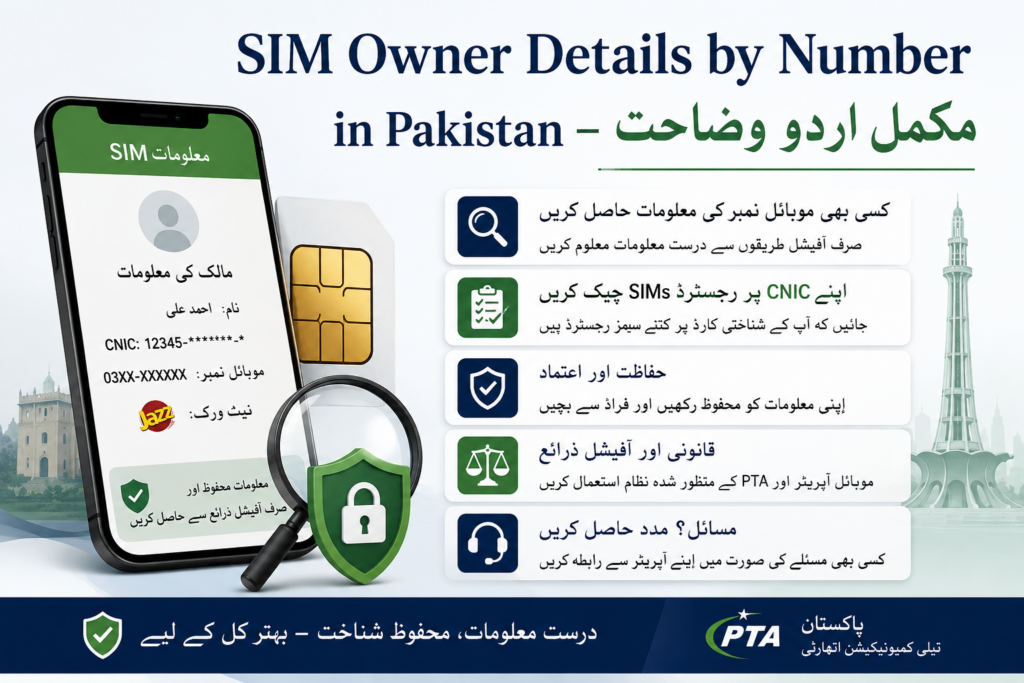
پاکستان میں SIM Owner Details by Number کے بارے میں معلومات تلاش کرتے وقت سب سے پہلے یہ سمجھنا ضروری ہے کہ موبائل نمبر، SIM registration، CNIC سے منسلک SIM information، network information اور کسی شخص کی نجی شناختی معلومات ایک ہی چیز نہیں ہیں۔ عام طور پر لوگ جب کسی موبائل نمبر کے ذریعے SIM owner details معلوم کرنے کی بات کرتے ہیں تو ان کا مقصد یہ جاننا ہوتا ہے کہ نمبر کس network سے تعلق رکھتا ہے، SIM کس شناخت کے ساتھ registered ہے، یا کسی مخصوص نمبر سے متعلق مزید معلومات کیسے verify کی جا سکتی ہیں۔ لیکن ہر قسم کی معلومات عام صارف کو ایک ہی طریقے سے دستیاب نہیں ہوتی۔ پاکستان میں SIM verification کے لیے official اور authorized طریقوں کو ترجیح دینا زیادہ محفوظ اور درست طریقہ ہے، جبکہ ایسے غیر سرکاری websites یا databases سے محتاط رہنا چاہیے جو صرف ایک موبائل نمبر ڈالنے پر کسی شخص کا مکمل نام، CNIC، گھر کا پتہ، live location یا دیگر private information دکھانے کا دعویٰ کرتے ہیں۔
اگر آپ اپنے نام پر registered SIMs کے بارے میں معلومات حاصل کرنا چاہتے ہیں تو مقصد کسی دوسرے شخص کی معلومات تلاش کرنا نہیں بلکہ اپنی شناخت سے منسلک mobile connections کو verify کرنا ہونا چاہیے۔ پاکستان میں official SIM Information System کے ذریعے اپنے CNIC کے ساتھ registered SIMs کی تعداد معلوم کرنے کی سہولت موجود ہے۔ یہ check اس لیے اہم ہے کیونکہ بعض اوقات کسی شخص کے CNIC پر ایسی SIM بھی registered ہو سکتی ہے جسے وہ خود استعمال نہیں کر رہا۔ ایسی صورت میں صارف کو معاملے کو نظر انداز کرنے کے بجائے متعلقہ mobile operator سے رابطہ کرنا چاہیے اور ضرورت پڑنے پر complaint کا official طریقہ استعمال کرنا چاہیے۔ اپنے CNIC پر موجود SIM registrations کو وقتاً فوقتاً check کرنا ایک اچھی security practice ہے، کیونکہ اس سے unauthorized یا غیر ضروری connections کا بروقت علم ہو سکتا ہے۔
موبائل نمبر کے حوالے سے ایک اور اہم distinction network information ہے۔ اگر کسی صارف کو صرف یہ معلوم کرنا ہو کہ ایک مخصوص mobile number کس network سے تعلق رکھتا ہے تو official SIM Information System میں number-based network checking کا الگ طریقہ موجود ہے۔ اس کا مطلب یہ نہیں کہ صرف network check کرنے سے subscriber کی مکمل personal identity سامنے آ جاتی ہے۔ Network information اور SIM owner information دو مختلف چیزیں ہیں۔ اسی طرح کسی نمبر کا active ہونا بھی یہ ثابت نہیں کرتا کہ اس نمبر کے بارے میں ہر قسم کی ذاتی معلومات public طور پر حاصل کی جا سکتی ہے۔ اس فرق کو سمجھنا بہت ضروری ہے کیونکہ online search میں SIM Owner Details کے نام سے مختلف websites سامنے آ سکتی ہیں، لیکن ان کی معلومات کی authenticity، source اور authorization ہر صورت میں واضح نہیں ہوتی۔
CNIC-based SIM verification کا بنیادی مقصد اپنی شناخت کے ساتھ registered connections کو سمجھنا ہے۔ اگر آپ کو شک ہے کہ آپ کے نام پر اضافی SIM موجود ہے تو پہلے official checking method سے اپنی registration status verify کریں۔ اگر کوئی غیر معروف connection سامنے آتا ہے تو اس کا network identify کریں اور متعلقہ operator سے رابطہ کریں۔ Operator آپ کو اپنی موجودہ procedure کے مطابق SIM blocking، disowning، verification یا دوسرے ضروری steps کے بارے میں رہنمائی دے سکتا ہے۔ اگر operator کے ذریعے مسئلہ حل نہ ہو تو مناسب telecom complaint channel استعمال کیا جا سکتا ہے۔ اس پورے process میں screenshots، SMS notifications یا complaint reference جیسی relevant information کو اپنے records کے لیے محفوظ رکھنا مفید ہو سکتا ہے، لیکن انہیں public platforms پر share کرتے وقت CNIC، phone number، OTP یا دوسری sensitive information چھپانی چاہیے۔
اس پورے موضوع میں privacy بھی بہت اہم ہے۔ موبائل number کسی شخص کی شناخت سے منسلک ہو سکتا ہے اور مختلف online accounts، banking alerts، email recovery اور دیگر services کے لیے استعمال ہو سکتا ہے۔ اسی وجہ سے اپنے mobile number اور SIM information کو غیر ضروری طور پر public کرنا مناسب نہیں۔ اگر کوئی website آپ سے SIM owner details دکھانے کے نام پر CNIC، OTP، password یا biometric information مانگتی ہے تو خاص احتیاط کریں۔ کسی بھی verification process کے دوران OTP کسی دوسرے شخص کے ساتھ share نہیں کرنا چاہیے۔ اسی طرح unknown links پر click کرنے، غیر معروف applications install کرنے یا suspicious forms میں personal information داخل کرنے سے بھی گریز کرنا چاہیے۔ Official verification کا مطلب صرف یہ نہیں کہ آپ کو result مل جائے؛ بلکہ یہ بھی ضروری ہے کہ verification کے دوران آپ کی اپنی information محفوظ رہے۔
SIM-swap fraud بھی mobile number security کا ایک اہم حصہ ہے۔ SIM swap میں fraudster کسی طریقے سے mobile number پر control حاصل کرنے کی کوشش کر سکتا ہے، جس کے بعد calls یا SMS متاثر ہو سکتے ہیں اور بعض online accounts کے authentication process پر بھی اثر پڑ سکتا ہے۔ اگر اچانک آپ کے mobile phone پر network ختم ہو جائے، calls یا SMS موصول ہونا بند ہو جائیں، یا ایسے account alerts آنے لگیں جنہیں آپ نے initiate نہیں کیا، تو اسے معمولی network problem سمجھ کر مسلسل ignore نہیں کرنا چاہیے۔ ایسی صورت میں اپنے mobile operator سے فوراً رابطہ کرنا بہتر ہے۔ اہم accounts کے passwords اور security settings بھی review کیے جا سکتے ہیں، خاص طور پر وہ accounts جو mobile number کو recovery یا authentication کے لیے استعمال کرتے ہیں۔
SIM verification کرتے وقت ایک بنیادی اصول یہ ہے کہ اپنی information کو verify کریں، دوسرے شخص کی private information حاصل کرنے کی کوشش نہ کریں۔ اگر آپ کے پاس کوئی mobile number ہے اور آپ اس کے بارے میں جاننا چاہتے ہیں تو پہلے یہ طے کریں کہ آپ کو واقعی کیا معلوم کرنا ہے۔ اگر مقصد network معلوم کرنا ہے تو network verification استعمال کریں۔ اگر مقصد اپنے CNIC پر registered SIMs دیکھنا ہے تو CNIC-based official checking method استعمال کریں۔ اگر مسئلہ آپ کی اپنی SIM، ownership، replacement، blocking یا account سے متعلق ہے تو mobile operator سے رابطہ کریں۔ اور اگر مسئلہ کسی telecom complaint یا unauthorized registration سے متعلق ہے تو appropriate official complaint route اختیار کریں۔ اس approach سے نہ صرف information زیادہ relevant ملتی ہے بلکہ privacy risks بھی کم ہوتے ہیں۔
Online SIM Owner Details by Number websites کے بارے میں بھی users کو محتاط رہنا چاہیے۔ کسی website پر search result آ جانا اس بات کا ثبوت نہیں کہ اس کی information official، current یا legally authorized ہے۔ بعض websites ایسی language استعمال کر سکتی ہیں جس سے صارف کو لگے کہ وہ مکمل CNIC، address یا subscriber profile حاصل کر سکتا ہے۔ لیکن کسی دعوے کو صرف website کے interface یا search result کی بنیاد پر authentic نہیں سمجھنا چاہیے۔ خاص طور پر اگر website personal credentials، OTP یا unnecessary identity information مانگ رہی ہو تو اسے red flag سمجھا جا سکتا ہے۔ ہمیشہ اس بات کو دیکھیں کہ information کس official service سے حاصل کی جا سکتی ہے اور کیا واقعی اس مقصد کے لیے وہ service موجود ہے۔
اپنی SIM information کو محفوظ رکھنے کے لیے چند بنیادی security habits اختیار کرنا بھی فائدہ مند ہے۔ سب سے پہلے verification کے لیے official platforms استعمال کریں۔ دوسرے، CNIC، OTP، passwords اور biometric information کو private رکھیں۔ تیسرے، suspicious SMS، WhatsApp messages، emails یا unknown links کے ذریعے آنے والی SIM verification offers پر فوراً اعتماد نہ کریں۔ چوتھے، اگر آپ کے accounts میں security alerts یا notifications available ہیں تو انہیں فعال رکھیں تاکہ unusual activity کا جلد علم ہو سکے۔ پانچویں، اگر آپ کو unauthorized SIM، suspicious activity یا fraud کا شبہ ہو تو متعلقہ operator اور ضرورت پڑنے پر appropriate official authority کو report کریں۔
یہ بھی یاد رکھنا چاہیے کہ IMEI اور SIM ایک ہی چیز نہیں ہیں۔ IMEI بنیادی طور پر mobile device کی شناخت سے متعلق ہوتا ہے، جبکہ SIM subscriber connection سے متعلق ہوتی ہے۔ اسی طرح DIRBS کا تعلق mobile devices کی registration اور device-related compliance سے ہے۔ اس لیے اگر کوئی شخص SIM owner information، IMEI اور DIRBS کو ایک ہی system یا ایک ہی قسم کی information سمجھتا ہے تو یہ غلط فہمی ہو سکتی ہے۔ ایک device کا IMEI اور اس device میں استعمال ہونے والی SIM کا subscriber record الگ concepts ہیں۔ اسی distinction کو سمجھنا telecom information کے بارے میں درست research کے لیے ضروری ہے۔
اسی طرح 668، 76367، CNIC-based checking اور operator support کے purposes کو بھی آپس میں mix نہیں کرنا چاہیے۔ مختلف services مختلف سوالات کا جواب دیتی ہیں۔ اپنے CNIC پر registered SIMs کی معلومات کے لیے ایک مخصوص verification route relevant ہو سکتا ہے، جبکہ mobile number کا network معلوم کرنے کے لیے الگ method استعمال کیا جا سکتا ہے۔ اسی طرح account-specific problem کے لیے operator ہی زیادہ مناسب source ہو سکتا ہے۔ اس لیے ایک ہی search method سے ہر قسم کی SIM owner information حاصل کرنے کی توقع رکھنا درست نہیں۔
اگر آپ کو کسی unknown caller کی طرف سے بار بار calls یا messages آ رہے ہیں تو SIM owner details تلاش کرنے کے بجائے پہلے اپنی safety کو ترجیح دیں۔ Unknown person کے ساتھ CNIC، OTP، banking information یا passwords share نہ کریں۔ اگر messages یا calls fraudulent، threatening یا suspicious نوعیت کے ہوں تو انہیں محفوظ رکھیں اور ضرورت کے مطابق متعلقہ official complaint یا reporting channel استعمال کریں۔ کسی دوسرے شخص کی private identity معلوم کرنے کے لیے unofficial databases کا استعمال مسئلے کو مزید پیچیدہ کر سکتا ہے۔
آخر میں SIM Owner Details by Number in Pakistan کا اصل مقصد یہ سمجھنا ہونا چاہیے کہ موبائل نمبر کے ذریعے کون سی information legitimately verify کی جا سکتی ہے اور کون سی information private رہتی ہے۔ اپنے CNIC سے منسلک SIMs کو check کرنا، کسی نمبر کا network معلوم کرنا، اپنی SIM کے مسائل کے لیے operator سے رابطہ کرنا اور unauthorized activity کی صورت میں official complaint process استعمال کرنا practical اور responsible approaches ہیں۔ اس کے برعکس کسی unknown website سے مکمل subscriber profile، CNIC، address یا private records حاصل کرنے کے دعوے پر اندھا اعتماد نہیں کرنا چاہیے۔ موبائل number کو اپنی digital identity کا اہم حصہ سمجھیں، اسے غیر ضروری طور پر share نہ کریں، OTP اور sensitive information کو محفوظ رکھیں اور SIM-related verification کے لیے official اور trusted channels استعمال کریں۔ مختصر طور پر، محفوظ SIM verification کا بہترین اصول یہی ہے کہ اپنی معلومات کو درست طریقے سے verify کریں، اپنی privacy کو محفوظ رکھیں، اور کسی دوسرے شخص کی نجی معلومات تک غیر مجاز رسائی حاصل کرنے کی کوشش نہ کریں۔